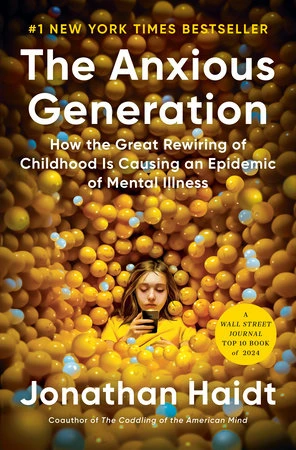
 Book cover · ISBN 9780593655030
Jonathan Haidt argues that the shift toward smartphone-centered childhood has contributed to worsening adolescent mental health. He connects digital life with reduced independent play and proposes changes that families, schools, and communities could make together.
An environment, not only an individual habit
The book examines how constant connection can reshape attention, social comparison, and everyday relationships. Haidt contrasts exposure to online risks with restrictions on ordinary offline independence. The focus is on a broader social environment rather than blaming individual children.
Change is easier when it is shared
Proposed responses include delaying smartphone and social-media use, phone-free schools, and more opportunities for independent activity. The argument emphasizes coordinated norms because one family’s choices are affected by what surrounding peers do.
A question to carry away
Which digital expectations have become normal without a deliberate decision? The book presents a particular causal argument; interpretation of the evidence remains debated. Its claims should be evaluated rather than treated as a complete explanation of every young person’s experience.