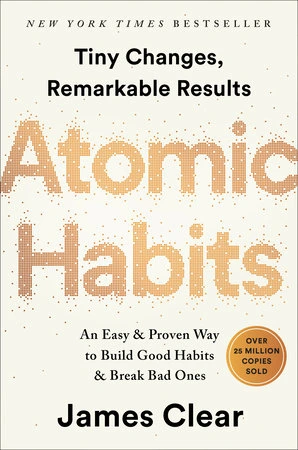
 Book cover · ISBN 9780735211292
James Clear explains how habits form and why small improvements can matter more than occasional bursts of motivation. His argument shifts attention from ambitious goals toward the routines and surroundings that make useful actions easier to repeat.
Make the next action easier
Clear organizes habit design around making a behavior obvious, attractive, easy, and satisfying. The reverse approach helps weaken unwanted routines. A visible reminder, a prepared workspace, or a smaller first step can reduce the effort needed to begin.
Think beyond motivation
The book connects repetition with identity: everyday actions provide evidence of the kind of person someone is becoming. Progress may be difficult to notice at first, so judging a routine after only a few attempts can be misleading.
A practical reading question
Which recurring obstacle could be removed before asking for more discipline? The useful takeaway is to design one repeatable action and its setting, then observe whether the system actually helps. Small does not mean effortless, and consistency still requires adjustment.